
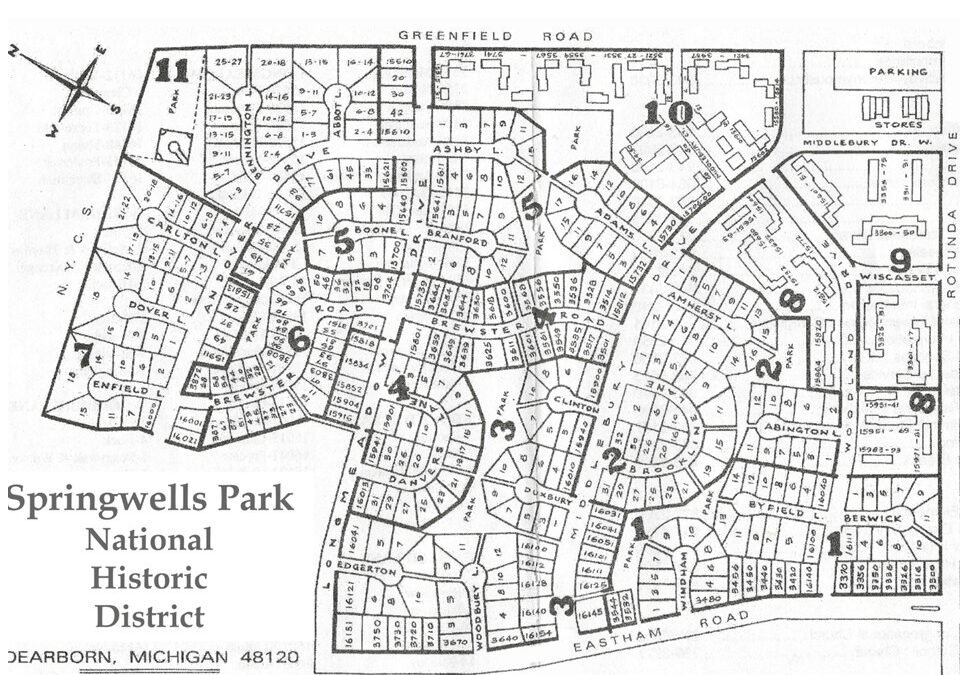
Historians Needed!
Local historian L. Glenn O’Kray wants to add a book about Springwells to the seven books he has edited or co-edited about Dearborn. The Historical Society of Michigan has awarded two of his books the designation, “Outstanding Michigan History Publication-Private Printing.”
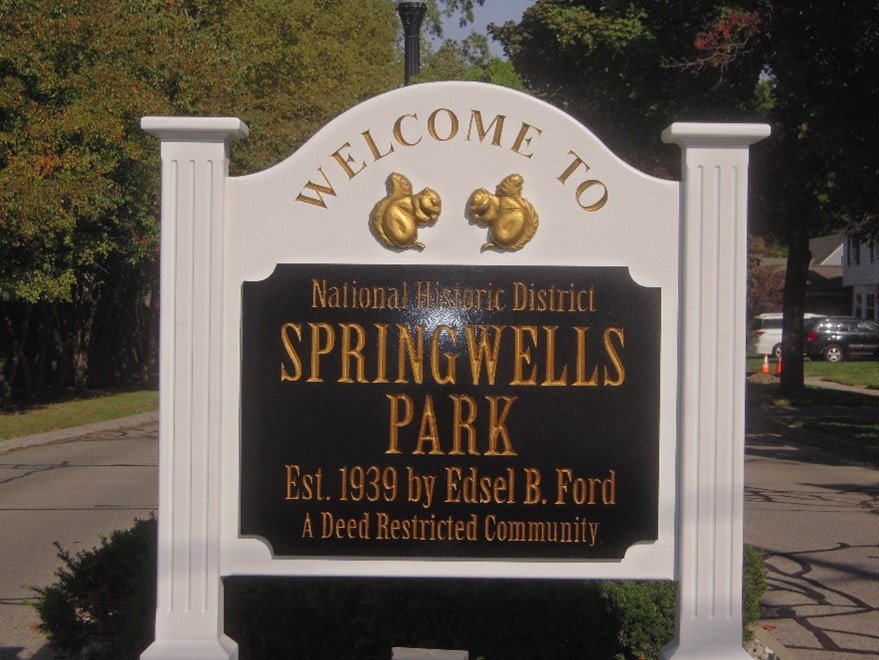
Volunteers are needed to research the history of the homes, to take photographs of the homes, and to raise money for the publication of the book. All profits will go to the Museum Guild of Dearborn. There will be a meeting to begin the process of writing the book on Thursday, March 12, 2026, at the McFadden-Ross Museum at 7 p.m.
O’Kray can be reached at (313) 480-9415.
The following is a brief history of the neighborhood from Judy Buck:
Springwells Park, also known as “The Foundation,” is a unique neighborhood within the City of Dearborn. Created in 1939 by Henry and Edsel Ford, Springwells Park represents an historical, deed restricted neighborhood built in the Colonial Revival, Early American style. Specific deed restrictions were part of how each home was designed and built.
As one looks around the city, one sees a variety of housing styles in neighborhoods. This is not the case in Springwells Park. Late nineteenth century, pre war, post war bungalows, mid century ranches, modest slab built ranch homes, duplexes, brick, frame, block, aluminum sided, vinyl sided, all of these type of homes and the materials used to construct them can be seen throughout Dearborn neighborhoods. Springwells Park was built to specifications that called for brick, brick with stone trims, and brick and frame. Strict “call outs” of materials used helped to maintain the Colonial Revival vibe found in Springwells Park.
Most of Dearborn is laid out in a grid pattern as neighborhoods developed over time. Springwells Park was designed to create a neighborhood with curving streets, cul-de-sacs and streetscapes to minimize the flow of traffic within the subdivision and to enhance it’s quiet nature. Numerous public walkways and common areas exist inside Springwells Park, a feature A that does not exist in any other neighborhood in Dearborn.
Various neighborhoods throughout the city sport a unique styles reflecting the time they were built and the socio-economic class of the home owner. Aviation Sub is far different from Springwells Park which was started in 1939. Dearborn Hills is vastly different from the majority of post war bungalows built in southwest Dearborn. Each geographic area has a unique style. River Bend along Cherry Hill and Military is old Dearborn, Levagood Park in northwest Dearborn is a much newer neighborhood by comparison. The Ford Homes, built in early 1920’s, reflect yet another style.
Each neighborhood has a unique offering to the “Style” of Dearborn. Each neighborhood has much to offer to a homebuyer. That being said, to create a historic district out of the entire city does not allow the various style to shine.
Springwells Park is deed restricted. Those restrictions have helped to keep the subdivision tied to its history and uniqueness. There are only two deed restricted neighborhoods in Dearborn, Springwells Park – 1939 and Dearborn Hills – 1926. Springwells Park was designated a local historic district in 1992 by the City of Dearborn – City Council and was named a National Historic District in 2015 by the National Park Service. The driving force to obtain this recognition at both levels was to maintain and preserve what we felt are important characteristics about our neighborhood within the city of Dearborn.
Recent Comments